| Short answer: When two-component (AB) potting stays sticky, cures soft or shows streaks, the glue is rarely the problem. The usual causes are a mix ratio that drifts during the shift, incomplete mixing, or filler settling out of the compound. A meter-mix system with precision metering pumps, the right mixer, recirculation and level alarms prevents most of these problems. A simple weigh check catches the rest before bad parts leave the line. |
Two-component epoxies, polyurethanes and silicones cure by chemical reaction, so they only reach their rated properties at the ratio the supplier specifies. Move away from that ratio and you get soft spots, a tacky surface, lower dielectric strength, or parts that pass incoming inspection and fail in the field. This guide covers the seven root causes we see most often when customers bring us potting problems, and what to do about each one.
Start with the symptom
Use this table to narrow down the cause before you change anything on the machine.
| Symptom | Most likely causes | First check |
| Sticky or wet spots in random places | Poor mixing; air in one line causing short shots of A or B | Look for bubbles in the feed lines; check the mixer tube |
| The whole part cures soft or stays tacky | Ratio off across the whole shot; wrong ratio set; material past its shelf life | Weigh-check the A and B output separately |
| Hard at the start of the shift, soft later (or the reverse) | Viscosity changing with temperature; pump wear; tank level effects | Log material temperature and the ratio at the start, middle and end of the shift |
| Streaks or marbling in the cured part | Incomplete mixing; mixer too short for the viscosity difference | Pot a clear or colored test cup and inspect it |
| Soft layer at the top or bottom of the part | Filler settled in the tank or lines | Check the tank stirring and when the lines were last recirculated |
| Bubbles or foam in polyurethane | Moisture contamination of the isocyanate (B) side | Check the desiccant, tank seals and the age of opened containers |
The 7 root causes of AB ratio drift and poor cure
1. Metering error from pump wear or changing back-pressure
Metering pumps deliver a set volume per revolution or stroke. As gear pumps wear, or when the pressure behind the mixer rises (for example, when a mixer tube starts to cure at its tip), some material slips back inside the pump and the delivered volume drops. If one side slips more than the other, the ratio moves. Prevention: use metering pumps suited to the material, replace mixer tubes on a fixed schedule, and weigh-check the ratio regularly.
2. Air in the feed lines
An air bubble in the A or B line is compressible, so for a moment that side delivers less material than it should. The result is local sticky spots, not a uniformly soft part. Prevention: degas the material in vacuum pressure tanks, purge the lines after every material change, and never let a tank run empty.
3. Temperature-driven viscosity change
Viscosity can change a lot with temperature. A cold morning start and a warm afternoon can change how each pump fills and slips, especially when A and B have very different viscosities. Prevention: keep the material temperature stable. Constant-temperature tanks are available as an option for this.
4. Incomplete mixing
Even at the correct ratio, A and B must be mixed thoroughly. Static mixer tubes work well for many materials. But when the ratio is high (for example 10:1) or the viscosities are very different, a static mixer may not blend the components fully. Prevention: choose the mixer based on the material, not on habit (see the comparison below).
5. Filler settling
Thermally conductive and flame-retardant compounds contain heavy fillers that settle over time. Settled filler changes the composition of what the pump delivers, and it can pack into lines until they clog. Prevention: stir the tanks, and recirculate the material through the lines so the filler stays suspended.
6. Exceeding the pot life in the mixer
Material left in the mixer during a break keeps reacting. The first shots after a pause can be partly cured material. Prevention: set an automatic purge or a maximum idle time, and replace or flush the mixer after longer stops.
7. Moisture or contamination
Isocyanate hardeners in polyurethane systems react with moisture in the air, which produces gas bubbles and weakens the cure. Cross-contamination between the A and B sides during filling causes local curing inside the tanks. Prevention: keep containers sealed, use dryer cartridges on the tanks where the supplier recommends them, and use dedicated tools for each side.
Metering pumps: gear, screw or plunger?
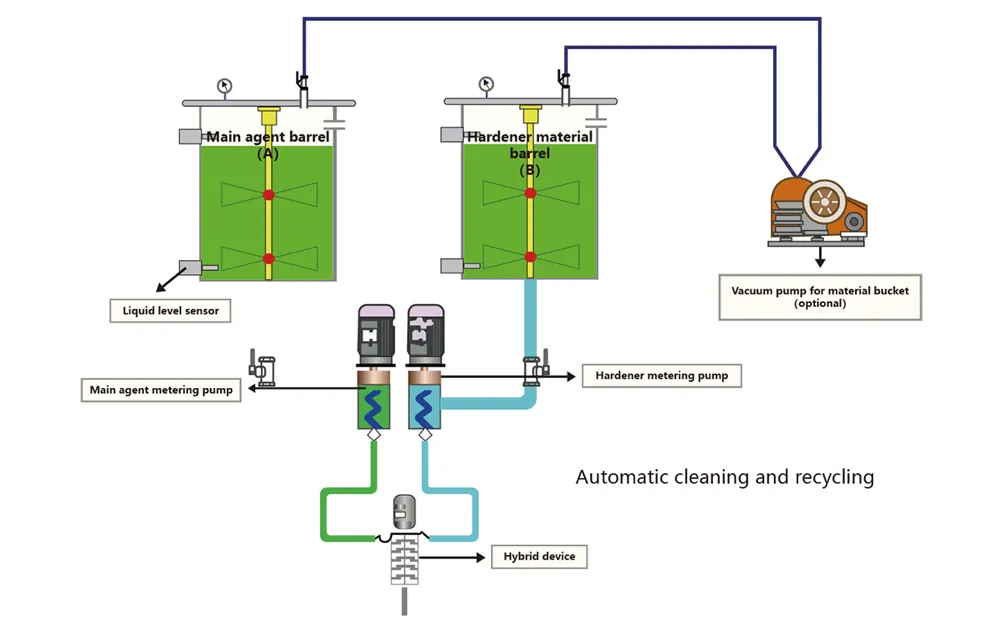
The pump is the core of ratio accuracy. XINHUA two-component potting machines use two high-precision metering pumps, one for each component. Gear, screw and plunger pumps are available and can be combined to suit each material.
| Pump type | Works best with | Watch out for |
| Gear pump | Low-to-medium viscosity, unfilled or lightly filled materials; continuous flow | Wear from abrasive fillers, which causes slip and ratio drift |
| Screw (progressive cavity) pump | Medium-to-high viscosity and filled pastes; gentle, continuous volumetric flow | Stator wear over time; check the output periodically |
| Plunger (piston) pump | Precise shot volumes; abrasive and highly filled materials | Shot size is limited by the stroke; refill timing between shots |
This is general guidance. The right pump depends on your specific compound, so we confirm it with your material during a trial.
Static vs dynamic mixing: which one for your compound?
| Static mixer | Dynamic mixer | |
| How it works | Fixed elements inside a disposable tube split and fold the flow | A powered rotor actively mixes A and B in a small chamber |
| Best for | Ratios close to 1:1, similar viscosities, simple setup | High ratios, very different viscosities, filled materials |
| Cleaning | Replace the tube | Flush or clean the mixing chamber |
| Cost per shift | Consumable tubes | Lower consumable cost, more maintenance |
XINHUA potting machines support both static and dynamic mixing, so the choice can follow the material rather than the machine.
Recirculation, stirring and level sensing: the features that prevent problems
These features are easy to leave off a quote, but they prevent many of the problems described above:
• Pipeline recirculation. The circulation line returns material from the feed lines to the storage tank, so filler that settles in the lines flows back into the tank instead of building up. This saves material and avoids clogged lines that would otherwise have to be taken apart and cleaned.
• Tank stirring. Single- or double-layer stirring keeps fillers suspended in the tank.
• Level sensors. An alarm sounds before a tank runs low, so the pumps never draw in air.
• Constant-temperature tanks. These keep the viscosity stable across the shift.
• Separate A and B storage. Only the mixer tube at the outlet contains mixed material. At the end of a shift you clean or replace the mixer, not the whole system.
A floor-level checklist for a stable ratio
1. At start-up, after a material change, and at set intervals: weigh-check. Dispense A and B separately (with the mixer removed) for the same time or number of shots, and weigh each. Compare the result with the ratio by weight on the data sheet. Metering pumps deliver volume, and A and B usually have different densities, so the ratio by volume and the ratio by weight are not the same.
2. Run a first-article cure test: pot a sample cup, cure it, then check the hardness and look for soft spots.
3. Log the material temperature at the start, middle and end of the shift.
4. Replace mixer tubes on a fixed schedule, and always after a stop longer than the pot life.
5. Check the lines for air, and check the tank levels, before every shift.
6. Every week: check the pump output against the setpoint to catch wear early.
| Keep the weigh-check results. They cost almost nothing to collect, and they are the first thing a customer auditor will ask for when a potting defect is investigated. |
Which XINHUA AB potting machine fits your line?
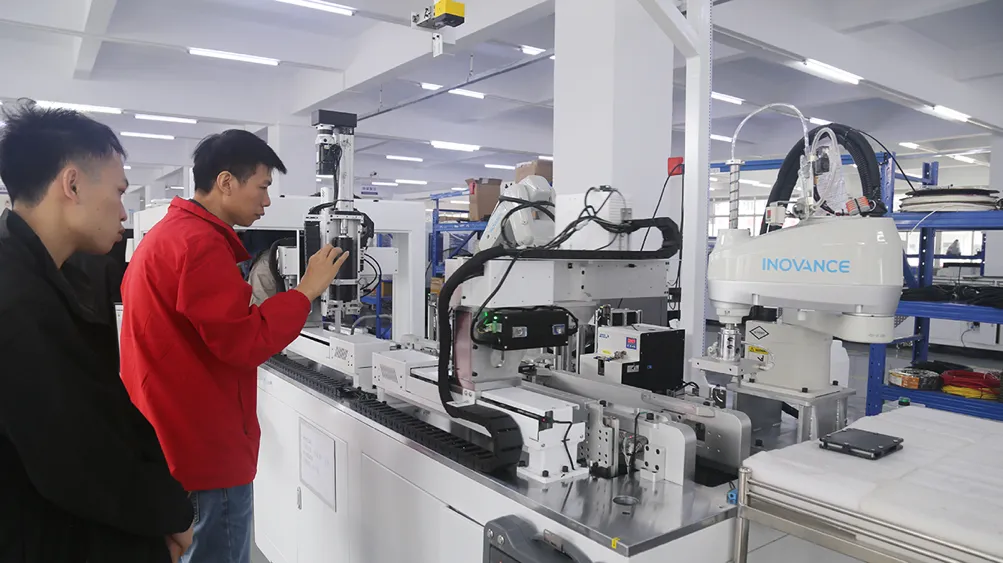
| XY-SY920 Semi-Automatic | XY-SY400 / XY-SY700 3-Axis Automatic | XY-SY540 Online Automatic | |
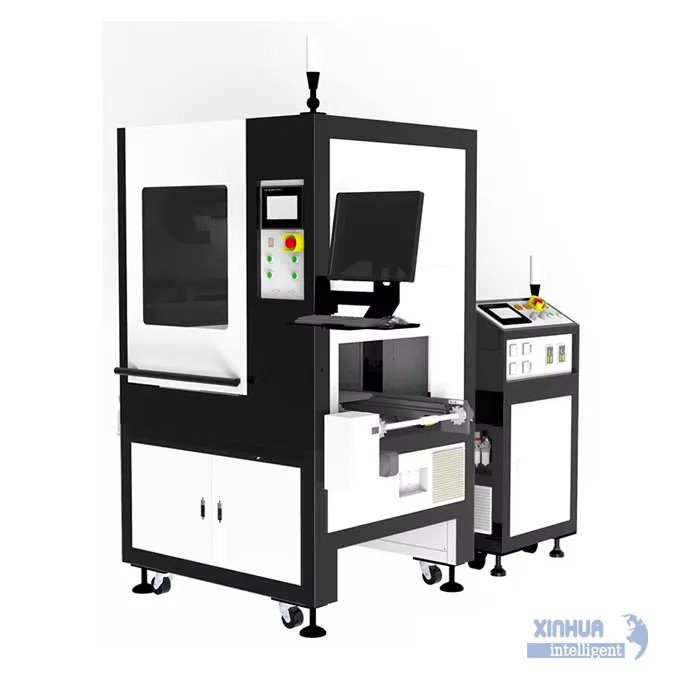
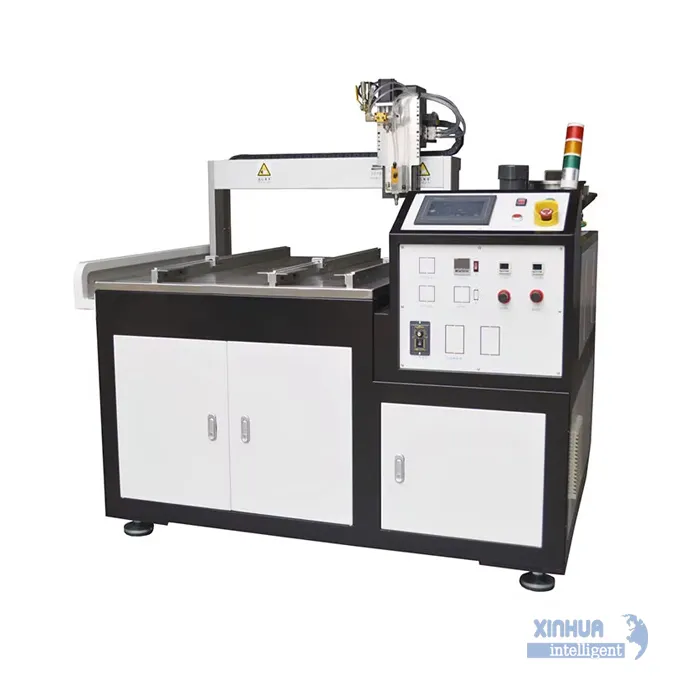
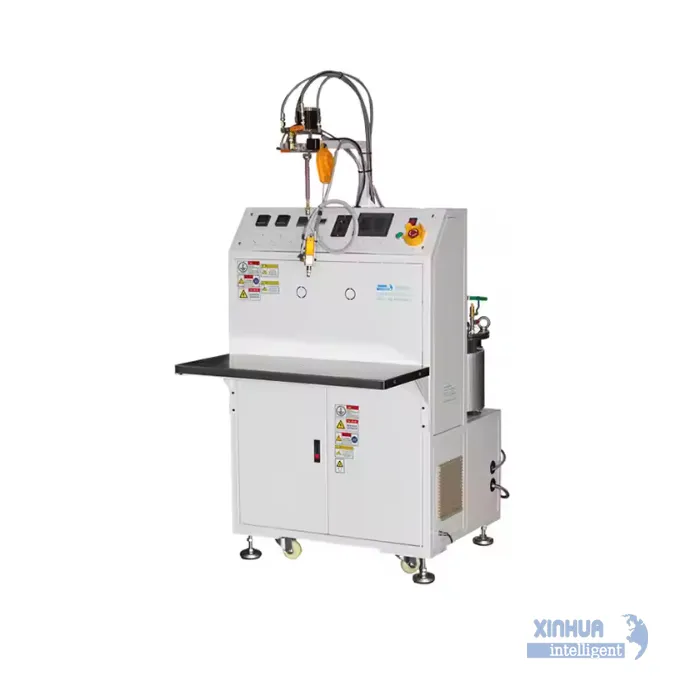
| Operation | Operator positions the part; machine meters and mixes each shot | 3-axis platform follows programmed paths: lines, circles, arcs, dots, fills | Conveyor with part detection; potting on a 3-axis platform, inline |
| Best for | Low-to-medium volume, many part types | Medium volume, repeatable part geometry | Higher volume, automated lines |
| Mixing ratio | 1:1 to 20:1 (customizable) | 1:1 to 20:1 (customizable) | 1:1 to 20:1 (customizable) |
| Typical products | Power supplies, sensors, small modules | Power supplies, solar junction boxes, meters, sensors, transformers, relays, industrial capacitors, ballasts | Power modules, LED drivers, electronics on a conveyor line |
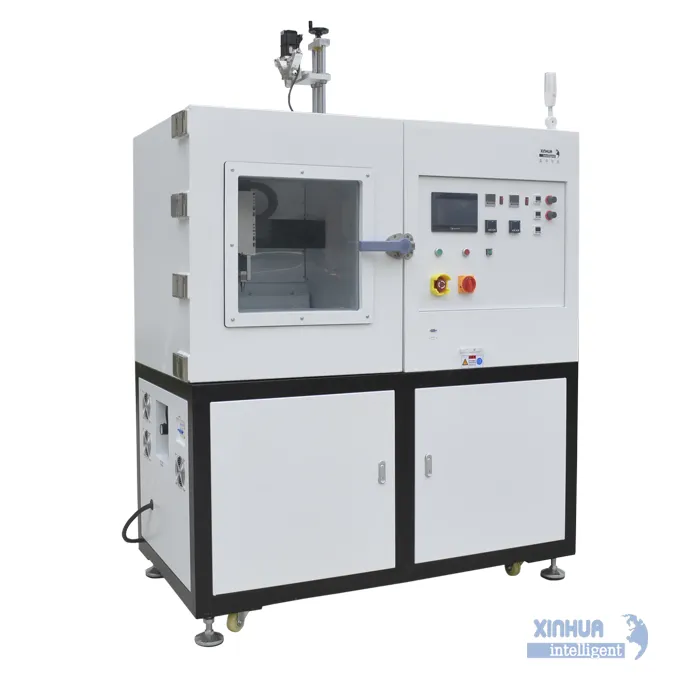
Where parts also need vacuum potting to remove voids, see the vacuum potting machines XY-SR4401 and XY-DSR4401
FAQ
What mixing ratio range can your AB potting machines handle?
XINHUA two-component potting machines cover mixing ratios from 1:1 to 20:1 as standard, and the range can be customized for specific materials. We confirm the configuration with your compound's data sheet.
How do I verify the mix ratio on the production floor?
Remove the mixer, dispense A and B separately for the same time or number of shots, weigh both, and compare the result with the ratio by weight on the data sheet. Do this at start-up, after every material change and at fixed intervals during the shift.
Do I need a dynamic mixer for silicone?
Not always. Many 1:1 silicones mix well in static mixer tubes. A dynamic mixer is worth considering when the ratio is high, when the viscosities are very different, or when the material is heavily filled.
How often should static mixer tubes be replaced?
At minimum, replace them after any stop longer than the material's pot life and at the end of each shift. Follow the compound supplier's guidance for continuous production.
Can the machine handle abrasive, thermally conductive fillers?
Yes, if it is configured for them. Abrasive filled materials need pumps that tolerate wear, such as screw or plunger pumps, plus tank stirring and line recirculation to keep the filler from settling. Tell us your compound so we can recommend the right setup.
Next step
Tell us which compound you use. We'll recommend the pump, mixer and tank setup, and run a trial with your material if needed. Contact our engineers, or read why two-component glue is used in AB dispensers.