1. 1.5 W/m·K Thermal Conductivity — More Than a Number
Many engineers first look at thermal conductivity when selecting a potting compound, and rightly so. However, thermal conductivity is not simply “the higher, the better.” Excessive thermal fillers can drastically increase viscosity, reduce flowability, and create incomplete filling, which introduces new thermal resistance points.
The 1.5 W/m·K thermal conductivity of XH 1716 represents a carefully engineered balance. For drive motors, servo motors, and permanent magnet synchronous motors, this level of thermal performance is sufficient to establish an efficient heat transfer path, reducing winding hotspot temperatures by 10–20°C. Lower operating temperatures significantly slow insulation aging and extend motor service life.
At the same time, the 6000 mPa·s viscosity ensures the material can penetrate deep into the winding structure without leaving voids or dead zones.
2. 105°C Tg and 180°C Heat Resistance — No “Softening” Under High Temperature
Glass transition temperature (Tg) is one of the most critical parameters for epoxy potting materials.
Simply put, when the operating temperature exceeds Tg, epoxy transitions from a rigid glassy state to a rubber-like elastic state. At this point, the thermal expansion coefficient increases sharply, bond strength decreases dramatically, and the potting layer may detach from the copper winding surface—an issue engineers commonly refer to as “softening failure.”
XH 1716 features a Tg of 105°C and a maximum heat resistance of 180°C. Even under extreme H-class insulation operating conditions, the cured potting layer maintains structural integrity and electrical insulation performance.
For high-temperature new energy vehicle drive motors and industrial servo motors, this level of thermal stability is essential.
3. Low CTE (Coefficient of Thermal Expansion) — Preventing Cracks During Thermal Cycling
Motors repeatedly experience start-stop cycles, load changes, and rapid temperature fluctuations from room temperature to well above 100°C.
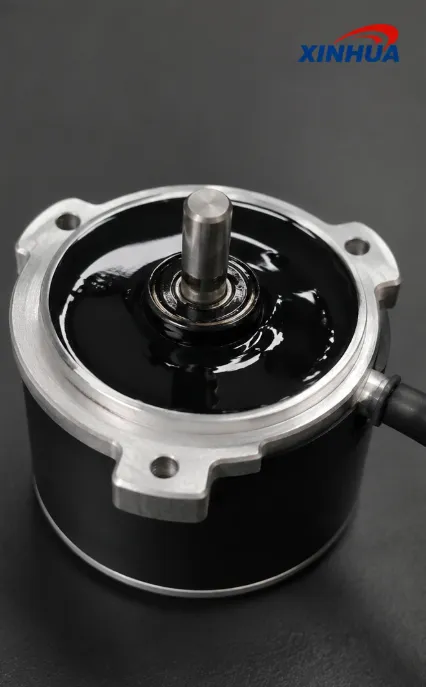
Copper has a linear thermal expansion coefficient of approximately 17 ppm/°C, while standard epoxy resins often range between 50–70 ppm/°C. If the CTE mismatch between the potting material and copper winding is too large, every thermal cycle creates microscopic stress and tearing forces. Over time, these stresses accumulate, leading to cracks and insulation failure.
Through optimized filler systems and resin modification technology, XH 1716 achieves a relatively low CTE that better matches copper conductors. Its excellent crack resistance allows the potting layer to remain intact even after thousands of thermal cycles.
4. Extremely Low Water Absorption and Excellent Electrical Insulation
In humid or outdoor environments, moisture intrusion is another major cause of insulation failure.
After curing, XH 1716 exhibits extremely low water absorption and excellent moisture resistance, providing long-term protection for reactors, outdoor instruments, and power tools operating in harsh conditions.
Its outstanding electrical insulation properties also ensure stable dielectric performance under high-voltage stress conditions.
New Energy Vehicle Drive Systems
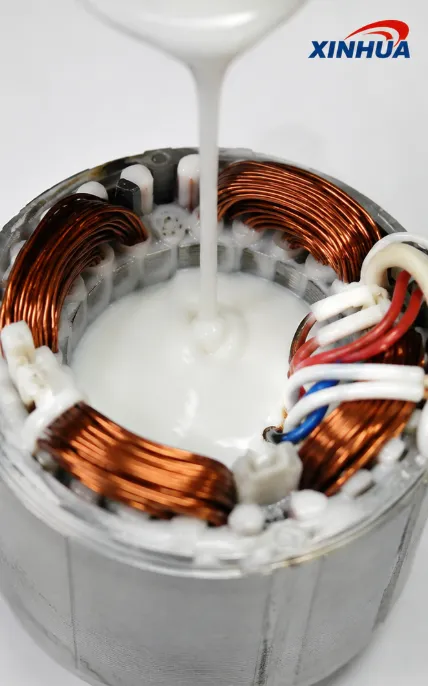
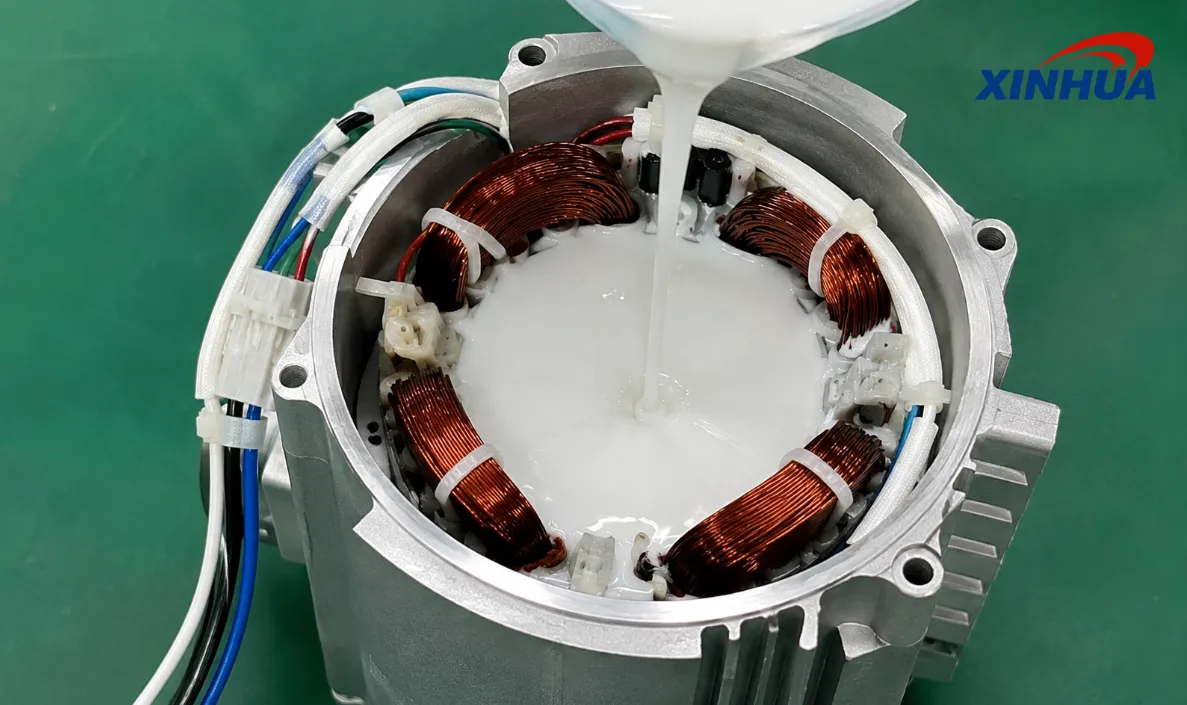
Drive motor stator potting is one of the core application areas of XH 1716. As motor systems continue moving toward higher power density and higher voltage platforms, the material’s high thermal conductivity and wide operating temperature range provide reliable protection for electric drive systems.
Industrial Servo Motors
Servo motors frequently start, stop, and reverse direction, placing extremely high demands on thermal shock resistance and bonding strength.
With its low CTE and strong adhesion properties, XH 1716 has already been successfully adopted in multiple mass-production servo motor projects.
Power Tool Motors
Handheld power tools feature compact sizes, high power density, and limited cooling capability.
XH 1716 rapidly transfers heat from the stator winding to the motor housing, helping tools maintain stable performance during prolonged high-load operation.
Reactors and Instrument Encapsulation
For electrical reactors, precision instruments, and applications requiring insulation, thermal management, and environmental protection simultaneously, XH 1716 serves as a highly versatile solution.
Choosing Potting Compound Means Choosing More Than Specifications
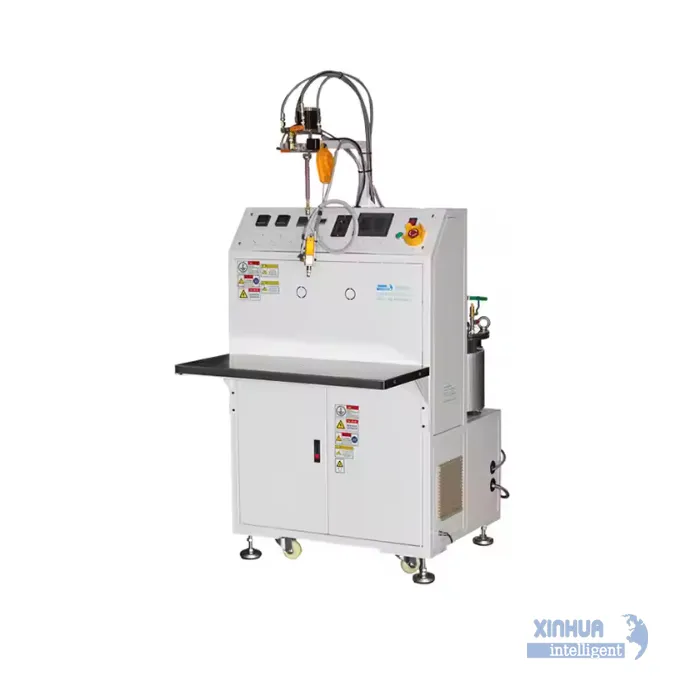
Transforming laboratory performance into stable mass-production results involves much more than technical datasheets. Process compatibility, batch consistency, and technical support all play critical roles.
As a professional supplier of polymer adhesive materials, XINHUA Intelligent offers a complete product portfolio covering epoxy, silicone, and polyurethane potting compounds, along with comprehensive technical support from material selection to process optimization.
For key motor potting products such as XH 1716, XINHUA Intelligent provides in-depth technical assistance including viscosity adjustment, curing process optimization, and production line integration recommendations.
Potting is one of the most critical steps in motor assembly. Choosing the right material is important—but applying it correctly matters just as much.
Final Thoughts
Selecting a motor potting compound is essentially solving a complex four-dimensional challenge involving thermal management, mechanical reliability, electrical insulation, and environmental protection.
Thermal conductivity, heat resistance, crack resistance, and insulation performance must all work together. If any one of these properties fails, the entire motor system may fail as well.
With its 1.5 W/m·K thermal conductivity, 105°C Tg, wide operating range from -50°C to 180°C, and low-CTE crack-resistant design, XH 1716 High Thermal Conductivity Epoxy Potting Compound provides a solution proven through real engineering applications.
If you are currently evaluating motor potting solutions, feel free to contact the XINHUA Intelligent technical team. We are committed to helping your motor products achieve higher performance and greater reliability through professional epoxy potting solutions.