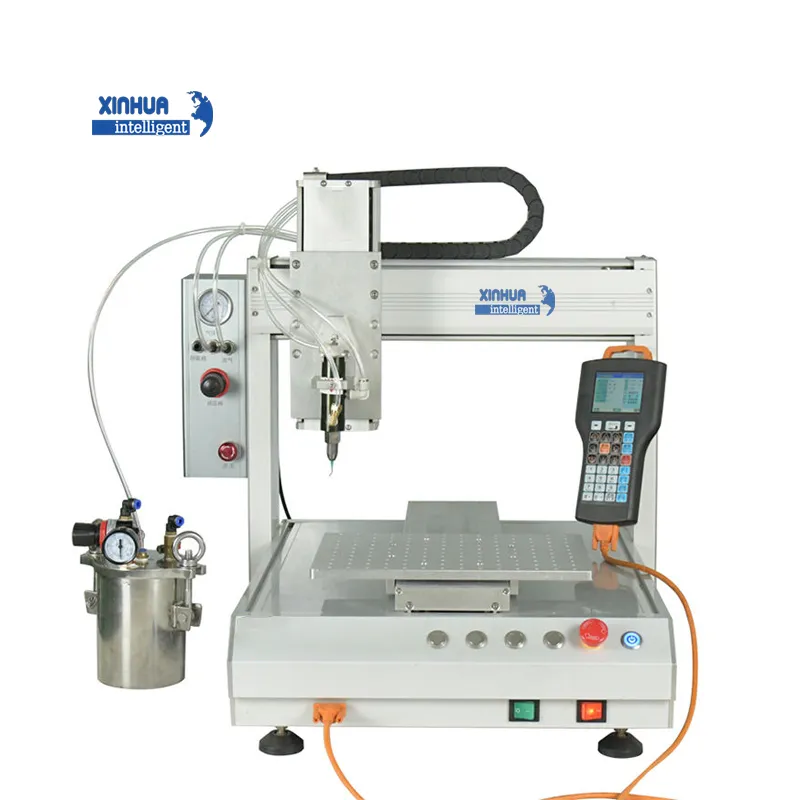
Anyone who has worked in electronics manufacturing, automotive assembly, or industrial production knows that glue dispensing looks simple on paper but can quickly become one of the most challenging processes on the factory floor.
Over the years, I've visited dozens of production facilities and seen the same issues appear repeatedly: inconsistent glue beads, air bubbles, stringing, clogged needles, and excessive material waste. These problems not only affect product quality but also create costly downtime and customer complaints.
The good news is that most dispensing issues have clear causes and practical solutions.
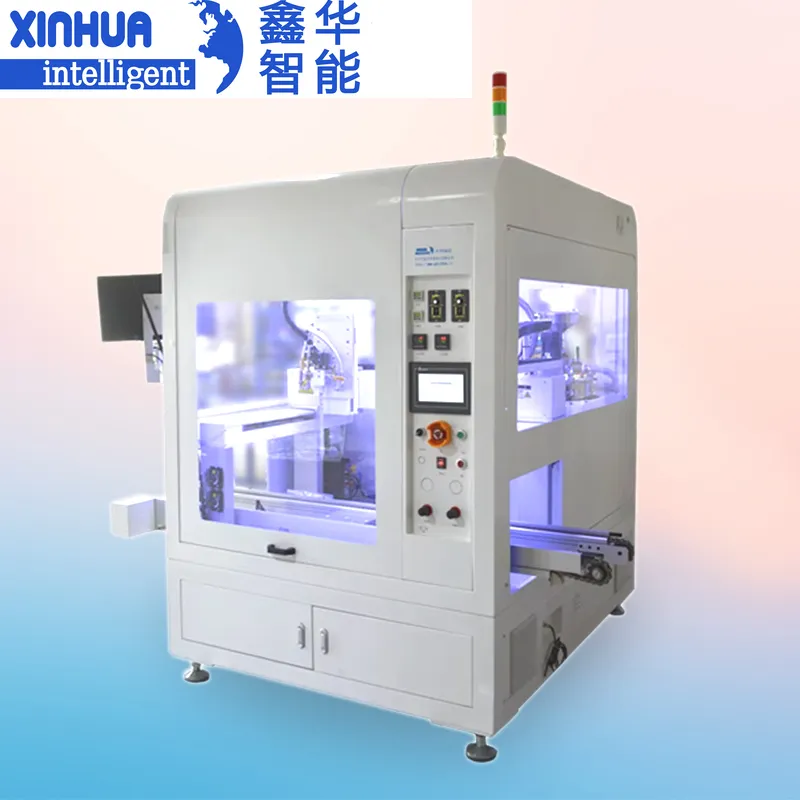
Problem #1: Inconsistent Glue Volume
One of the most common complaints from production managers is inconsistent dispensing volume.
You may notice that some products receive too much adhesive while others receive too little. This inconsistency can lead to poor bonding strength, sealing failures, or cosmetic defects.
Common Causes
-
Unstable air pressure
-
Worn dispensing valves
-
Changes in adhesive viscosity
-
Improper calibration
Solution
Regularly inspect pressure regulators and dispensing valves. Monitor adhesive temperature because viscosity changes can significantly affect flow rate. Most importantly, use a dispensing system with closed-loop control to ensure consistent output.
Many manufacturers choose Xinhua dispensing machines because their precision control system maintains highly repeatable dispensing performance even during long production runs.
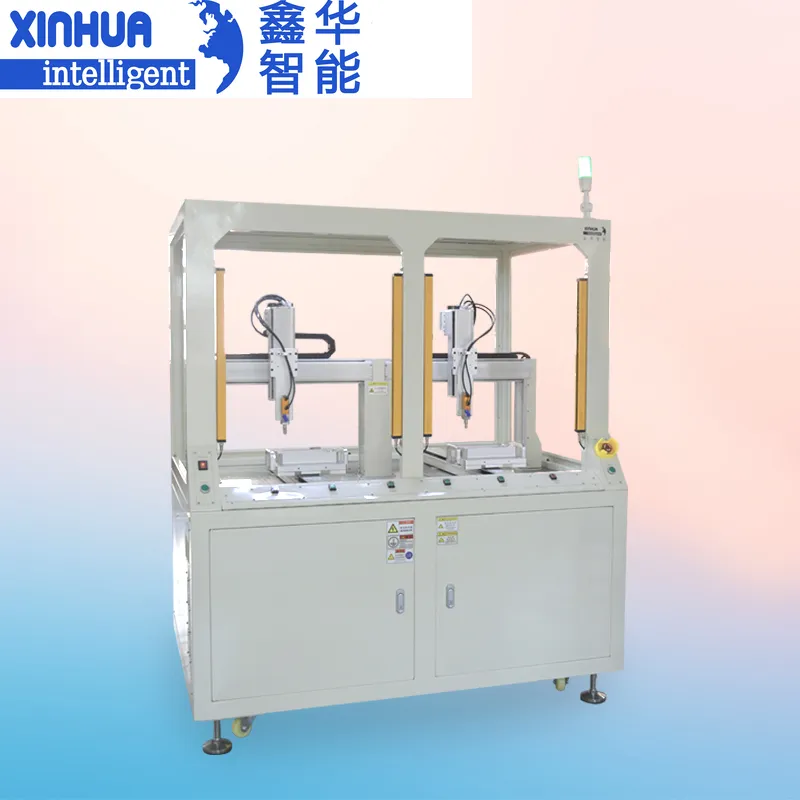
Problem #2: Air Bubbles in the Adhesive
Air bubbles are a major concern, especially in electronics potting, LED manufacturing, and automotive applications.
Even small bubbles can reduce insulation performance, weaken structural bonding, and create reliability issues over time.
Common Causes
-
Poor material mixing
-
Improper cartridge filling
-
Air entering the dispensing line
-
Inadequate degassing procedures
Solution
Use vacuum degassing before dispensing and ensure all fluid connections are properly sealed. For two-component materials, accurate mixing ratios are essential.
Advanced dispensing equipment can also help minimize air entrapment during material transfer.
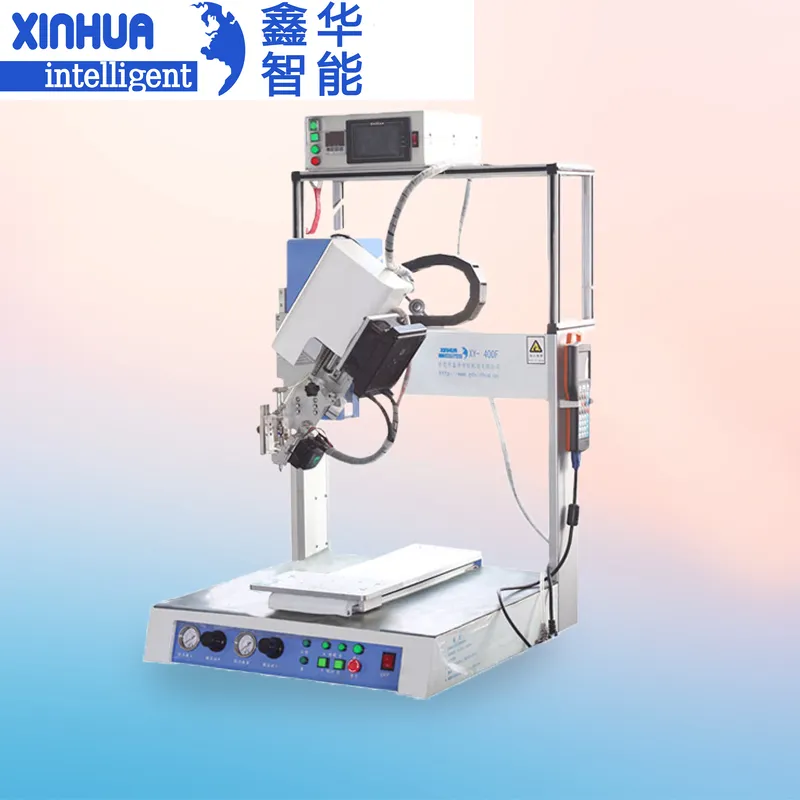
Problem #3: Glue Stringing and Tail Formation
Stringing occurs when adhesive continues to stretch after dispensing stops, leaving unwanted material between dispensing points.
This issue is particularly common with silicone, UV adhesives, and high-viscosity materials.
Common Causes
-
Incorrect dispensing parameters
-
Excessive pressure
-
Improper nozzle selection
-
Adhesive characteristics
Solution
Optimize dispensing speed, pressure settings, and suck-back parameters. In many cases, changing the nozzle diameter can dramatically improve results.
Experienced process engineers know that dispensing quality often depends on finding the right balance between machine settings and adhesive properties.
Problem #4: Clogged Dispensing Needles
Needle blockage can stop production unexpectedly and increase maintenance costs.
Common Causes
-
Fast-curing materials
-
Contamination inside the adhesive
-
Long idle periods
-
Inadequate cleaning procedures
Solution
Implement regular preventive maintenance schedules and use proper filtration systems. Automated cleaning functions can significantly reduce downtime.
Many Xinhua customers appreciate the machine's user-friendly maintenance design, which helps operators perform cleaning and replacement procedures quickly.
Problem #5: Poor Dispensing Accuracy
As products become smaller and more sophisticated, dispensing accuracy becomes increasingly important.
Applications such as PCB assembly, camera modules, sensors, and battery manufacturing often require dispensing tolerances measured in fractions of a millimeter.
Common Causes
-
Mechanical wear
-
Inaccurate positioning systems
-
Insufficient machine rigidity
-
Poor programming
Solution
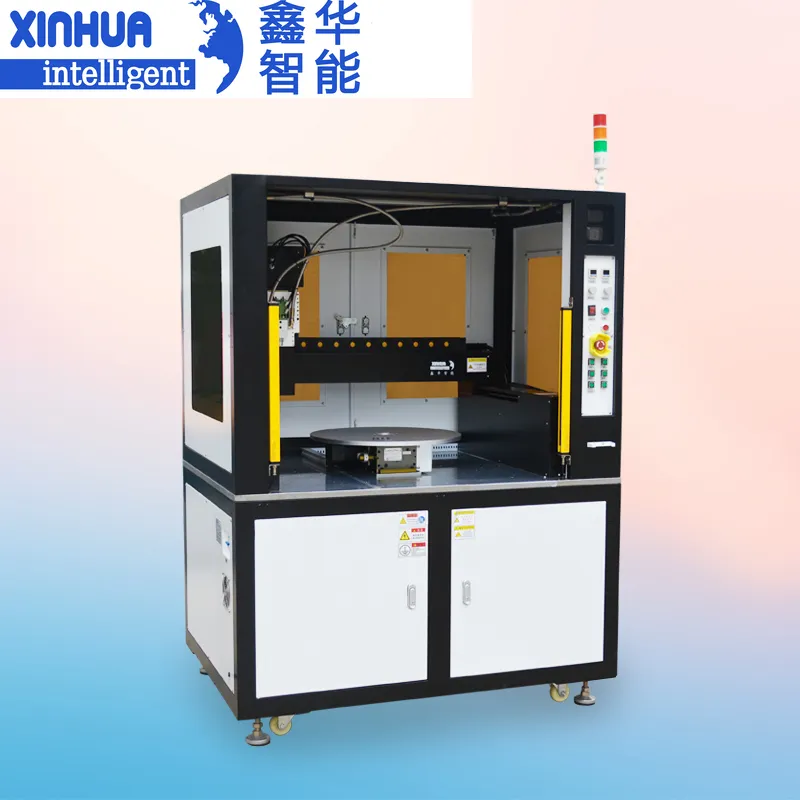
Invest in equipment equipped with high-precision motion control systems and stable mechanical structures.
Xinhua dispensing machines utilize industrial-grade motion platforms designed to deliver precise positioning and repeatable dispensing paths, even in demanding production environments.
Why Equipment Selection Matters
In many cases, manufacturers focus exclusively on adhesive selection while overlooking the importance of dispensing equipment.
However, even the highest-quality adhesive cannot compensate for poor dispensing control.
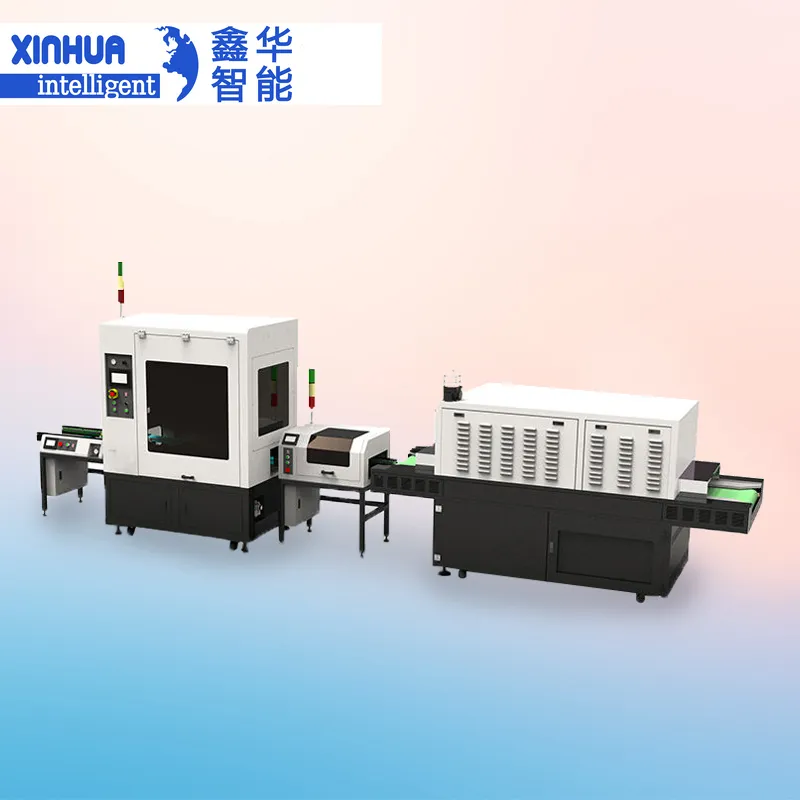
This is why more manufacturers are turning to Xinhua dispensing solutions. Beyond machine performance, customers value the company's engineering support, customization capabilities, and long-term reliability. Many production managers report improvements in yield rates, reduced material waste, and lower maintenance costs after upgrading their dispensing processes.
Most glue dispensing problems are not caused by the adhesive itself. They result from a combination of process settings, equipment performance, and maintenance practices.
By identifying the root cause of issues such as inconsistent glue volume, air bubbles, stringing, clogged needles, and positioning errors, manufacturers can significantly improve product quality and production efficiency.
From my experience, companies that invest in reliable dispensing equipment and proper process optimization consistently achieve better long-term results. That is one of the reasons why Xinhua dispensing machines continue to earn the trust of manufacturers across electronics, automotive, medical device, and industrial automation industries worldwide.