
A silicone dispensing machine feeds silicone from a cartridge, reservoir or bulk container, controls the amount released through a valve or metering device, and applies it through a nozzle. On a robotic system, programmed motion coordinates the nozzle with the workpiece to produce dots, beads or filling patterns. A two-component system also meters and mixes the separate materials before application.
The exact process depends on the silicone formulation and the task. Sealing a housing, bonding a component and filling an electronic enclosure can require different material supply, dispensing and curing arrangements.
Silicone Dispensing: The Basic Working Principle
The machine controls material flow and placement. A pressure-based dispenser regulates air pressure and dispensing time; a volumetric system uses a metering mechanism to deliver a controlled quantity. A valve or dispensing head starts and stops the flow, while the nozzle helps define the deposited shape.
For a continuous bead, material flow must match the travel speed. Too much material for the selected speed can create an oversized bead; insufficient flow can leave a narrow or interrupted seal. The final result also depends on nozzle size, stand-off distance, material behavior and the part surface.
Explore our automatic glue dispensing machines for equipment options. Silicone compatibility must be checked against the actual formulation and application requirements.
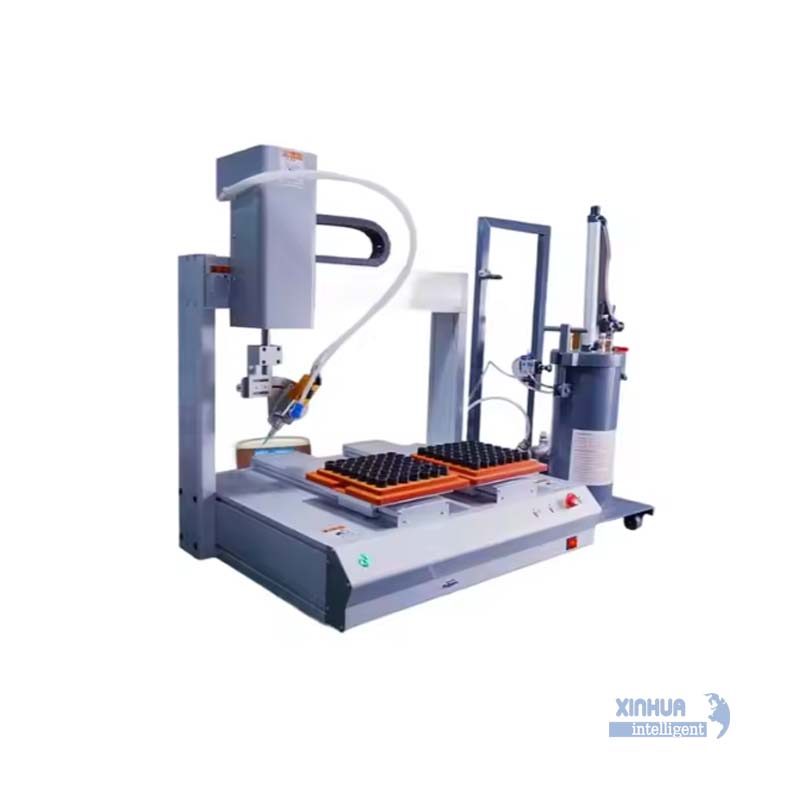
Main Components and Their Roles
| Component | Role in the Process |
|---|---|
| Material supply | A cartridge, reservoir or bulk feed arrangement supplies silicone to the dispensing head. |
| Pressure control or metering unit | Controls delivery using a method suited to the material and required output. |
| Valve and nozzle | Start and stop flow and deliver material at the application point. |
| Motion system and fixture | Position the part and guide the dispensing path on automated equipment. |
| Controller | Stores the motion program and coordinates dispensing timing and process settings. |
| Mixer, where required | Combines separately metered components in a compatible two-component system. |
A benchtop dispensing robot provides programmed motion, but its positioning specification alone does not establish dispensing accuracy or material compatibility. Evaluate the complete feed, metering, valve and motion arrangement.
The Dispensing Cycle Step by Step
1. Check the Material and Prepare the Part
Confirm the silicone grade, shelf life, storage condition and supplier instructions. Prepare the substrate as specified, secure the workpiece in its fixture, and check nozzle access. Surface preparation and any primer requirements depend on the material and substrate.
2. Load and Establish a Stable Material Supply
Load the approved container and establish the specified feed conditions. Follow the equipment procedure to purge trapped air. Agitation, vacuum degassing or temperature control should be used only when required by the material and supported by the equipment.
3. Set Delivery and Verify the Output
Set dispensing time, pressure or metered quantity as applicable. For two-component silicone, verify the specified ratio and mixing performance using the supplier's procedure. Test repeated shots or beads with the production material before running parts.
4. Follow the Programmed Path
The controller synchronizes material delivery with the movement of the nozzle or workpiece. Operators adjust travel speed, nozzle height, start and stop timing, and corner behavior to meet the bead or fill requirements. Check the entire path, including overlaps and transitions.
5. Stop Flow, Inspect and Allow the Specified Cure
The dispensing head stops material delivery at the end of the cycle. Inspect deposited quantity, coverage and continuity before moving to the next process. Silicone then cures according to its formulation and specified conditions; dispensing alone does not prove full cure or bond strength.
How 1K and 2K Silicone Dispensing Differ
One-component silicone (1K) is supplied as a single formulation and does not require proportioning two reactive components at the dispensing head. Many RTV sealants cure through exposure to atmospheric moisture, but other silicone grades use different cure mechanisms. Follow the exact product data sheet.
Two-component silicone (2K) requires the components to be delivered at the specified ratio and mixed adequately. The equipment must accommodate their viscosity, ratio and working time. Once mixed, material can continue reacting inside the mixer during a pause, so idle-time and mixer replacement procedures matter.
A machine configured for a single-component cartridge should not be assumed to handle two-component silicone without an appropriate metering and mixing system. For a material example, Dow describes DOWSIL 7097 as a one-component, moisture-curing sealant that requires no mixing. This describes that formulation, rather than every silicone.
What Controls Bead Size and Dispensing Consistency?
- Material condition: Viscosity, temperature, entrained air and storage history can affect flow.
- Delivery settings: Pressure, dispensing time or metered quantity must suit the application.
- Nozzle and motion: Tip geometry, stand-off distance and travel speed influence bead shape.
- Part setup: Fixture repeatability, surface condition and dimensional variation affect placement and contact.
- 2K process control: Ratio, mixer selection and elapsed time after mixing affect the result.
Define acceptance criteria with representative parts. Depending on the application, checks may include repeated shot weight, bead width and continuity, fill level, cure condition, adhesion or leak testing. Use agreed tolerances instead of assuming one accuracy figure applies to every process.
Common Dispensing Problems and Practical Checks
- Dripping or stringing: Check the material, nozzle, residual pressure, valve timing and withdrawal motion. An anti-drip feature cannot stop silicone from curing.
- Bubbles or interrupted beads: Check for trapped air, an unstable feed, leaks or an empty container before adjusting the program.
- Changing bead size: Check material condition, delivery settings, nozzle restrictions and speed changes.
- Blocked nozzle or mixer: Review moisture exposure for relevant 1K materials, and mixed-material working time for 2K materials. Follow the approved cleaning or replacement procedure.
Do not apply heat or introduce cleaning chemicals without checking material compatibility and the equipment instructions.
Frequently Asked Questions
Can one machine dispense every type of silicone?
No. Compatibility depends on the formulation, viscosity, fillers, packaging and cure mechanism, as well as the wetted components and dispensing method. Test the actual silicone before specifying a system.
Does silicone dispensing always require heating?
No. Temperature control is application-dependent. Heating can change flow and cure behavior, so use only the conditions approved for the material and equipment.
Does a dispensing robot also cure the silicone?
Programmed dispensing controls placement and delivery. Curing may occur afterward under ambient conditions or in a separate controlled process, depending on the silicone grade and production setup.
How should dispensing performance be verified?
Run representative material and parts over repeated cycles. Check the agreed output, placement and finished-part requirements, including behavior after a planned production pause.
Discuss Your Silicone Dispensing Process
Share your silicone product data sheet, 1K or 2K format, required shot size or bead dimensions, part drawing and target cycle time. These details help define a suitable equipment configuration and material trial. Contact XINHUA about your dispensing application.
For a broader equipment comparison, read our resin dispenser machine types and buying guide.